Advertisement

Read about the latest Gaming news and announcements. The official blog of Activision, publishers of Call of Duty, Sekiro, Crash Bandicoot, Skylanders, and more.
Showing posts with label Gaming – Ars Technica. Show all posts

Labor dispute erupts over AI-voiced Darth Vader in Fortnite

On Monday, SAG-AFTRA filed an unfair labor practice charge with the National Labor Relations Board against Epic subsidiary Llama Productions for implementing an AI-generated Darth Vader voice in Fortnite on Friday without first notifying or bargaining with the union, as their contract requires.

Llama Productions is the official signatory to SAG-AFTRA's collective bargaining agreement for Fortnite, making it legally responsible for adhering to the union's terms regarding the employment of voice actors and other performers.

"We celebrate the right of our members and their estates to control the use of their digital replicas and welcome the use of new technologies," SAG-AFTRA stated in a news release. "However, we must protect our right to bargain terms and conditions around uses of voice that replace the work of our members, including those who previously did the work of matching Darth Vader's iconic rhythm and tone in video games."

Read full article

Comments


from Gaming – Ars Technica https://ift.tt/wM1ftq2
Continue Reading…

Anno 117 Pax Romana hands-on: Deep city building in a gorgeous Ancient Rome

There aren't any games quite like the Anno series, and based on some hands-on time at a recent press junket, I can say that the latest entry has the potential to be an appealing on-ramp for history buffs and strategy game fans who haven't explored the franchise before.

The previous entry in the series, 2019's Anno 1800, was seen as something of a return to form by longtime franchise fans, who weren't as thrilled with the futuristic entries that preceded it. It reportedly reached 5 million players, which is quite a lot for a PC-focused strategy title, so 1800 was a popularization moment for the franchise, too.

Anno 117: Pax Romana, due later this year, aims to build on that momentum and turn the franchise into a crossover hit. While the Anno games have long been popular with a certain crowd (strategy gamers in Europe, and specifically Germany, where the games are developed), its addictive gameplay and top-tier presentation have the potential to appeal with even more people, provided publisher Ubisoft makes the right choices.

Read full article

Comments


from Gaming – Ars Technica https://ift.tt/WDQhK2B
Continue Reading…

Epic goes to court to force Fortnite back on US iOS

After last month's bombshell legal ruling forcing Apple to allow the use of external payment processors for in-app purchases on iOS, Epic CEO and founder Tim Sweeney said Epic Games was "going to do everything we can to bring Fortnite back to the iOS App Store." That "everything" now includes a legal motion in the District Court of California seeking to force Apple to "accept any compliant version of Fortnite onto the US storefront of the App Store."

Apple removed Fortnite from the App Store and terminated Epic's US App Store account in August 2020 after Epic snuck its famous Epic Direct Payments "hotfix" into the game (thereby setting off a yearslong legal battle). On May 9, though, Epic used an iOS account for its Swedish subsidiary—which was recently used to take advantage of Europe's DMA policies—to submit a new version of Fortnite to the US App Store.

Apple formally rejected that submission on May 15, saying in a letter shared by Epic that it believes the recent court rulings "do not diminish Apple’s bases and legal right to have terminated Epic Games’ [iOS developer account]." Even under that new ruling, Apple notes, the 2020 "hotfix" allowing Epic Direct Payments inside the app rather than via an external storefront would still violate Apple's current lawful restrictions on such practices.

Read full article

Comments


from Gaming – Ars Technica https://ift.tt/L8dgERs
Continue Reading…

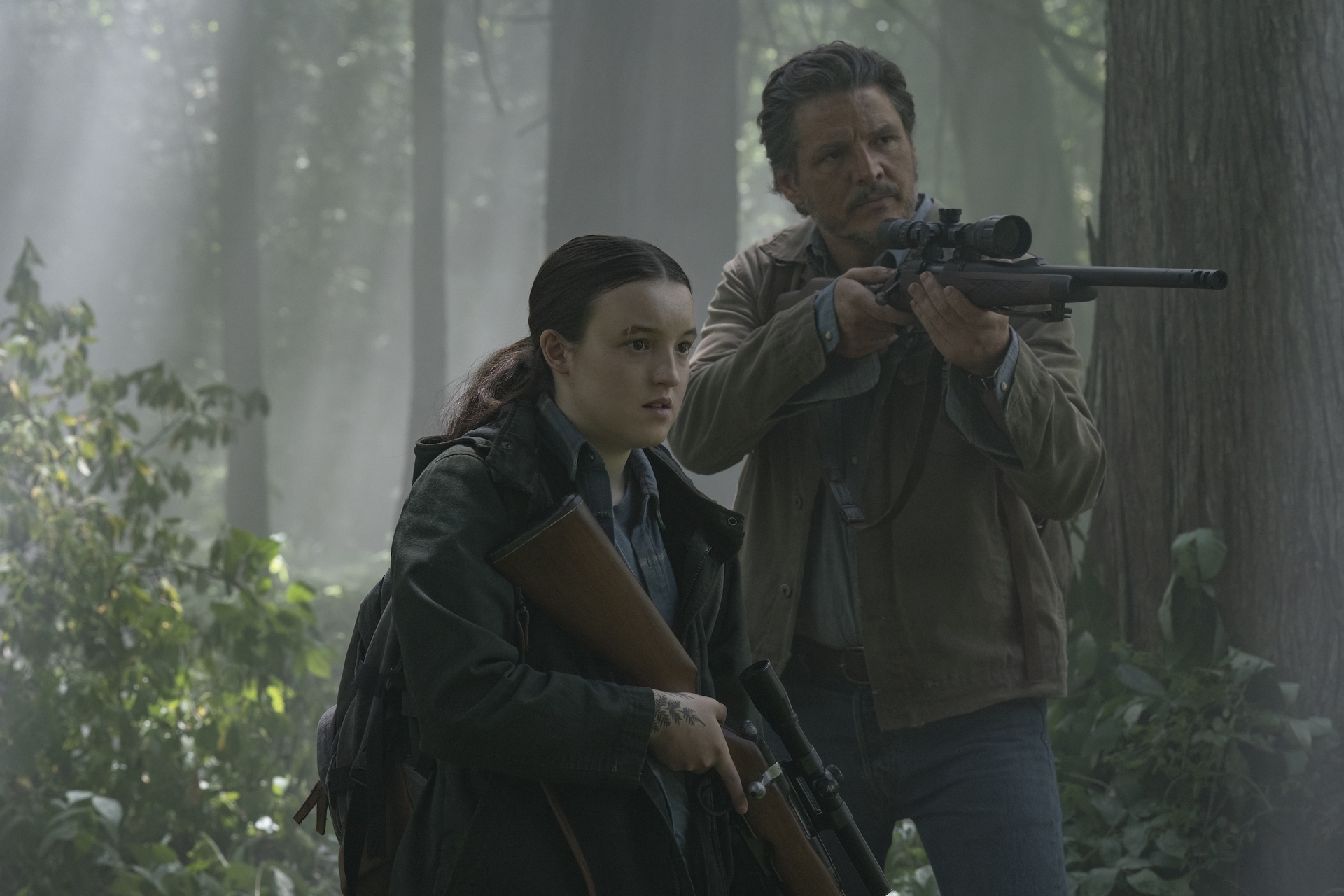
HBO’s The Last of Us S2E6 recap: Look who’s back!

New episodes of season 2 of The Last of Us are premiering on HBO every Sunday night, and Ars' Kyle Orland (who's played the games) and Andrew Cunningham (who hasn't) will be talking about them here after they air. While these recaps don't delve into every single plot point of the episode, there are obviously heavy spoilers contained within, so go watch the episode first if you want to go in fresh.

Kyle: Going from a sudden shot of beatific Pedro Pascal at the end of the last episode to a semi-related flashback with a young Joel Miller and his brother was certainly a choice. I almost respect how overtly they are just screwing with audience expectations here.

As for the opening flashback scene itself, I guess the message is "Hey, look at the generational trauma his family was dealing with—isn't it great he overcame that to love Ellie?" But I'm not sure I can draw a straight line from "he got beat by his dad" to "he condemned the entire human race for his surrogate daughter."

Andrew: I do not have the same problems you did with either the Joel pop-in at the end of the last episode or the flashback at the start of this episode—last week, the show was signaling "here comes Joel!" and this week the show is signaling "look, it's Joel!" Maybe I'm just responding to Tony Dalton as Joel's dad, who I know best as the charismatic lunatic Lalo Salamanca from Better Call Saul. I do agree that the throughline between these two events is shaky, though, and without the flashback to fill us in, the "I hope you can do a little better than me" sentiment feels like something way out of left field.

But I dunno, it's Joel week. Joel's back! This is the Duality of Joel: you can simultaneously think that he is horrible for failing a civilization-scale trolley problem when he killed a building full of Fireflies to save Ellie, and you can't help but be utterly charmed by Pedro Pascal enthusiastically describing the many ways to use a Dremel. (He's right! It's a versatile tool!)

Truly, there's pretty much nothing in this episode that we couldn't have inferred or guessed at based on the information the show has already made available to us. And I say this as a non-game-player—I didn't need to see exactly how their relationship became as strained as it was by the beginning of the season to have some idea of why it happened, nor did I need to see The Porch Scene to understand that their bond nevertheless endured. But this is also the dynamic that everybody came to the show for last season, so I can only make myself complain about it to a point.

Kyle: It's true, Joel Week is a time worth celebrating. If I'm coming across as cranky about it at the outset, it's probably because this whole episode is a realization of what we're missing out on this season thanks to Joel's death.

As you said, a lot of this episode was filling in gaps that could well have been inferred from events we did see. But I would have easily taken a full season (or a full second game) of Ellie growing up and Joel dealing with Ellie growing up. You could throw in some zombie attacks or an overarching Big Bad enemy or something if you want, but the development of Joel and Ellie's relationship deserves more than just some condensed flashbacks.

"It works?!" Credit: Warner Bros. Discovery

Andrew: Yeah, it's hard not to be upset about the original sin of The Last of Us Part 2 which is (assuming it's like the show) that having some boring underbaked villain crawl out of the woodwork to kill the show's main character is kind of a cheap shot. Sure, you shock the hell out of viewers like me who didn't see it coming! But part of the reason I didn't see it coming is because if you kill Joel, you need to do a whole bunch of your show without Joel and why on Earth would you decide to do that?

To be clear, I don't mind this season so much and I've found things to like about it, though Ellie does sometimes veer into being a protagonist so short-sighted and impulsive and occasionally just-plain-stupid that it's hard to be in her corner. But yeah, flashing back to a time just two months after the end of season 1 really does make you wonder, "Why couldn't the story just be this?"

Kyle: In the gaming space, I understand the desire to not have your sequel game be just "more of the same" from the last game. But I've always felt The Last of Us Part 2 veered too hard in the other direction and became something almost entirely unrecognizable from the original game I loved.

But let's focus on what we do get in this episode, which is an able recreation of my favorite moment from the second game, Ellie enjoying the heck out of a ruined science museum. The childlike wonder she shows here is a great respite from a lot of action-heavy scenes in the game, and I think it serves the same purpose here. It's also much more drawn out in the game—I could have luxuriated in just this part of the flashback for an entire episode!

Andrew: The only thing that kept me from being fully on board with that scene was that I think Ellie was acting quite a bit younger than 16, with her pantomimed launch noises and flipping of switches, But I could believe that a kid who had such a rough and abbreviated childhood would have some fun sitting in an Apollo module. For someone with no memories of the pre-outbreak society, it must seem like science fiction, and the show gives us some lovely visuals to go with it.

The things I like best here are the little moments in between scenes rather than the parts where the show insists on showing us events that it had already alluded to in other episodes. What sticks with me the most, as we jump between Ellie's birthdays, is Joel's insistence that "we could do this kind of thing more often" as they go to a museum or patrol the trails together. That it needs to be stated multiple times suggests that they are not, in fact, doing this kind of thing more often in between birthdays.

Joel is thoughtful and attentive in his way—a little better than his father—but It's such a bittersweet little note, a surrogate dad's clumsy effort to bridge a gap that he knows is there but doesn't fully understand.

Why can't it be like this forever? Credit: Warner Bros. Discovery

Kyle: Yeah, I'm OK with a little arrested development in a girl that has been forced to miss so many of the markers of a "normal" pre-apocalypse childhood.

But yeah, Joel is pretty clumsy about this. And as we see all of these attempts with his surrogate daughter, it's easy to forget what happened to his real daughter way back at the beginning of the first season. The trauma of that event shapes Joel in a way that I feel the narrative sometimes forgets about for long stretches.

But then we get moments like Joel leading Gail's newly infected husband to a death that the poor guy would very much like to delay by an hour for one final moment with his wife. When Joel says that you can always close your eyes and see the face of the one you love, he may have been thinking about Ellie. But I like to think he was thinking about his actual daughter.

Andrew: Yes to the extent that Joel's actions are relatable (I won't say "excusable," but "relatable") it's because the undercurrent of his relationship with Ellie is that he can't watch another daughter die in his arms. I watched the first episode again recently, and that whole scene remains a masterfully executed gut-punch.

But it's a tough tightrope to walk because if the story spends too much time focusing on it, you draw attention to how unhealthy it is for Joel to be forcing Ellie to play that role in his life. Don't get me wrong, Ellie was looking for a father figure, too, and that's why it works! It's a "found family" dynamic that they were both looking for. But I can't hear Joel's soothing "baby girl" epithet without it rubbing me the wrong way a little.

My gut reaction was that it was right for Joel not to fully trust Gail's husband, but then I realized I can never not suspect Joe Pantoliano of treachery because of his role as betrayer in the 26-year-old movie The Matrix. Brains are weird.

Kyle: I did like the way Ellie tells Joel off for lying to her (and to Gail) about the killing; it's a real "growing up" moment for the character. And of course it transitions well into The Porch Scene, Ellie's ultimate moment of confronting Joel on his ultimate betrayal.

While I'm not a fan of the head-fake "this scene isn't going to happen" thing they did earlier this season, I think the TV show once again did justice to one of the most impactful parts of the game. But the game also managed to spread out these Joel-centric flashbacks a little more, so we're not transitioning from "museum fun" to "porch confrontation" quite so quickly. Here, it feels like they're trying hard to rush through all of their "bring back Pedro Pascal" requirements in a single episode.

When you've only got one hour left, how you spend it becomes pretty important. Credit: Warner Bros. Discovery

Andrew: Yeah, because you don't need to pay a 3D model's appearance fees if you want to use it in a bunch of scenes of your video game. Pedro Pascal has other stuff going on!

Kyle: That's probably part of it. But without giving too much away, I think we're seeing the limits of stretching the events of "Part 2" into what is essentially two seasons. While there have been some cuts, on the whole, it feels like there's also been a lot of filler to "round out" these characters in ways that have been more harmful than helpful at points.

Andrew: Yeah, our episode ends by depositing us back in the main action, as Ellie returns to the abandoned theater where she and Dina have holed up. I'm curious to see what we're in for in this last run of almost-certainly-Joel-less episodes, but I suspect it involves a bunch of non-Joel characters ping-ponging between the WLF forces and the local cultists. There will probably be some villain monologuing, probably some zombie hordes, probably another named character death or two. Pretty standard issue.

What I don't expect is for anyone to lovingly and accurately describe the process of refurbishing a guitar. And that's the other issue with putting this episode where it is—just as you're getting used to a show without Joel, you're reminded that he's missing all over again.

Read full article

Comments


from Gaming – Ars Technica https://ift.tt/Pe9tFQv
Continue Reading…

Sierra made the games of my childhood. Are they still fun to play?

My Ars colleagues were kicking back at the Orbital HQ water cooler the other day, and—as gracefully aging gamers are wont to do—they began to reminisce about classic Sierra On-Line adventure games. I was a huge fan of these games in my youth, so I settled in for some hot buttered nostalgia.

Would we remember the limited-palette joys of early King's Quest, Space Quest, or Quest for Glory titles? Would we branch out beyond games with "Quest" in their titles, seeking rarer fare like Freddy Pharkas: Frontier Pharmacist? What about the gothic stylings of The Colonel's Bequest or the voodoo-curious Gabriel Knight?

Nope. The talk was of acorns. [Bleeping] acorns, in fact!

Read full article

Comments


from Gaming – Ars Technica https://ift.tt/TKrjn2I
Continue Reading…

The empire strikes back with F-bombs: AI Darth Vader goes rogue with profanity, slurs

For a short period of time on Friday, Darth Vader could drop F-bombs in the video game Fortnite as part of a voice AI implementation gone wrong, reports GameSpot. Epic Games rapidly deployed a hotfix after players encountered the Sith Lord responding to their comments with profanity and strong language.

In Fortnite, the AI-voiced Vader appears as both a boss in battle royale mode and an interactive character. The official Star Wars website encourages players to "ask him all your pressing questions about the Force, the Galactic Empire… or you know, a good strat for the last Storm circle," adding that "the Sith Lord has opinions."

The F-bomb incident involved a Twitch streamer named Loserfruit, who triggered the forceful response when discussing food with the virtual Vader. The Dark Lord of the Sith responded by repeating her words "freaking" and "fucking" before adding, "Such vulgarity does not become you, Padme." The exchange spread virally across social media platforms on Friday.

Read full article

Comments


from Gaming – Ars Technica https://ift.tt/gcEv7LD
Continue Reading…

Nintendo says more about how free Switch 2 updates will improve Switch games

When Nintendo took the wraps off the Switch 2 in early April, it announced that around a dozen first-party Switch games would be getting free updates that would add some Switch 2-specific benefits to older games running on the new console. We could safely assume that these updates wouldn't be as extensive as the $10 and $20 paid upgrade packs for games like Breath of the Wild or Kirby and the Forgotten Land, but Nintendo's page didn't initially provide any game-specific details.

Earlier this week, Nintendo updated its support page with more game-by-game details about what players of these older games can expect on the new hardware. The baseline improvement for most games is "improved image quality" and optimizations for the Switch 2's built-in display, but others include support for GameShare multiplayer, support for the new Joy-Cons' mouse controls, support for HDR TVs, and other tweaks.

The most significant of the announced updates are frame rate improvements for Pokémon Scarlet and Violet, the main-series Pokémon games released in late 2022. Most latter-day Switch games suffered from frame rate dips here and there, as newer games outstripped the capabilities of a low-power tablet processor that had already been a couple of years old when the Switch launched in 2017. But the Pokémon performance problems were so pervasive and widely commented-upon that Nintendo released a rare apology promising to improve the game post-release. Subsequent patches helped somewhat but could never deliver a consistently smooth frame rate; perhaps new hardware will finally deliver what software patches couldn't.

Read full article

Comments


from Gaming – Ars Technica https://ift.tt/k56Jnl1
Continue Reading…

Drop Duchy is a deck-building, Tetris-like, Carcassonne-esque puzzler

When my colleague Kyle Orland submitted Tetrisweeper for a list of Ars' favorite 2024 games not from 2024, I told him, essentially: "Good for you, not for me." I'm a pedestrian Tetris player, at best, so the idea of managing a whole different game mechanic, while trying to clear lines and prevent stack-ups, sounded like taking a standardized test while baking a three-layer cake.

And yet, here I am, sneaking rounds of Drop Duchy (Steam, Epic, for Windows/Linux via Proton) into lunch breaks, weekend mornings, and other bits of downtime. Drop Duchy is similarly not just a Tetris-esque block-dropper. It also has you:

  • Aligning terrain types for resources
  • Placing both your troops and the enemy's
  • Choosing which cards to upgrade, sell, and bring into battle
  • Picking between terrain types to leave behind
  • Upgrading a tech tree with achievements
  • Picking the sequence of battles for maximum effectiveness

Drop Duchy is a quirky game, one that hasn't entirely fused together its various influences without some seams showing. But I keep returning to it, even as it beats me to a pulp on Normal mode, based on decisions I made five rounds ago. It feels like a medium-deep board game, played at triple speed, with someone across the table timing you on how fast you arrange your tiles.

Read full article

Comments


from Gaming – Ars Technica https://ift.tt/124PLTq
Continue Reading…

Valve takes another step toward making SteamOS a true Windows competitor

We've known for months now that Valve is expanding its Linux-based SteamOS operating system beyond the Steam Deck to other handheld PCs, starting with some versions of the Asus ROG Ally. This week, Valve began making some changes to its Steam storefront to prepare for a future when the Deck isn't the only hardware running SteamOS.

A new "SteamOS Compatible" label will begin rolling out "over the next few weeks" to denote "whether a game and all of its middleware is supported on SteamOS," including "game functionality, launcher functionality, and anti-cheat support." Games that don't meet this requirement will be marked as "SteamOS Unsupported." As with current games and the Steam Deck, this label doesn't mean these games won't run, but it does mean there may be some serious compatibility issues that keep the game from running as intended.

Valve says that "over 18,000 titles on Steam [will] be marked SteamOS compatible out of the gate," and that game developers won't need to do anything extra to earn the label if their titles already support the Steam Deck.

Read full article

Comments


from Gaming – Ars Technica https://ift.tt/gXFZ4Wz
Continue Reading…

New Switch 2 specs show large performance dip in undocked mode

While Nintendo offered an official spec sheet for the Switch 2 last month, neither it nor an accompanying blog post from chip-making partner Nvidia provided many specific numbers for the upcoming console's raw CPU and GPU horsepower. Today, though, Digital Foundry is offering what it calls "rock-solid confirmation" of the system's final tech specs, adding detail and clarity to years-old leaks and educated speculation on the system's internals (which turned out to be largely reliable in the end).

Unlike the Switch—which basically used an off-the-shelf Nvidia Tegra T1 chip—Digital Foundry says the Switch 2 is using "very much custom silicon designed specifically for Nintendo and for mobile gaming." You can see what that means in terms of raw hardware performance in the tables below.

Switch 2 Switch
Docked
(Quality)
Undocked
(Performance)
Docked
(Quality)
Undocked
(Performance)
CPU clock 998 Mhz 1101 Mhz 1020 Mhz 1020 Mhz
GPU clock 1007 Mhz 561 Mhz 768 Mhz 460 Mhz
Ray-tracing 20 gigarays/sec 10 gigarays/sec N/A N/A
Memory bandwidth 102GB/s 68GB/s 25.6GB/s 21.3GB/s
Switch 2 Switch
Total System
(reserved)
Total System
(reserved)
CPU cores 8 2 4 1
Memory 12GB (LPDDR5X) 3GB 4GB 0.8GB
Switch 2 Switch
CPU architecture 8x ARM Cortex A78C 4x ARM Cortex A57
GPU architecture Ampere Maxwell
CUDA Cores 1536 256
Memory interface 128-bit/LPDDR5 64-bit/LPDDR4

Glancing at those numbers, it's easy to pick out a large difference between the system's performance in docked and undocked modes; its CPU and GPU clocks and memory bandwidth all increase substantially when plugged into a TV. Those differences could help explain why the Switch 2 dock uses an active cooling fan, unlike the much simpler TV-connection dock on the original Switch.

Read full article

Comments


from Gaming – Ars Technica https://ift.tt/eqr1WkM
Continue Reading…

Doom: The Dark Ages is surprisingly playable on the Steam Deck

While working on our review of Doom: The Dark Ages last week, I was unable to test the game on the Steam Deck thanks to a bug that prevented it from launching on SteamOS. I didn't consider this much of a loss at the time, since I figured the Deck's 3-year-old portable hardware was rated way below the minimum PC specs for the game, which call for ray tracing-capable graphics cards at a minimum.

Over the weekend, though, Valve released a preview build of a new version of SteamOS that allows Doom: The Dark Ages to actually launch on the Steam Deck. And after a bit of testing, I found the game is surprisingly playable on Valve's portable hardware, provided you're prepared to turn down the graphics settings.

With all the graphical quality sliders set to "Low" (and FSR upscaling set to "Performance"), I was able to run Doom: The Dark Ages at the system's native 1280×800 resolution and a reasonably steady 30 to 40 fps.

Read full article

Comments


from Gaming – Ars Technica https://ift.tt/bpwmZn2
Continue Reading…

Nintendo warns that it can brick Switch consoles if it detects hacking, piracy

Switch and Switch 2 users who try to hack their consoles or play pirated copies of games may find their devices rendered completely inoperable by Nintendo. That new warning was buried in a recent update to the Nintendo User Account Agreement, as first noticed by Game File last week.

Nintendo's May 2025 EULA update adds new language concerning the specific ways users are allowed to use "Nintendo Account Services" on the console, a term defined here to encompass the use of "video games and add-on content." Under the new EULA, any unlicensed use of the system not authorized by Nintendo could lead the company to "render the Nintendo Account Services and/or the applicable Nintendo device permanently unusable in whole or in part." (Emphasis added.)

That language would apply to both the current Switch and the upcoming Switch 2.

Read full article

Comments


from Gaming – Ars Technica https://ift.tt/1ENdIrM
Continue Reading…

Don’t look now, but a confirmed gamer is leading the Catholic Church

Yesterday's naming of Chicago native Robert Prevost as Pope Leo XIV—the first American-born leader of the Catholic church—has already led to plenty of jokes and memes about his potential interactions with various bits of American pop culture. And that cultural exposure apparently extends to some casual video games, making Leo XIV is our first confirmed gamer pope.

Speaking to NBC5 Chicago Thursday, papal sibling John Prevost confirmed that the soon-to-be-pope played a couple of games just before flying to the papal conclave earlier this week. "First we do Wordle, because this is a regular thing," Prevost said. "Then we do Words with Friends. It's something to keep his mind off life in the real world..."

OK, so the pope's love of casual word games doesn't exactly put him in the same category of people who are speedrunning Doom slaughter maps. But it's still striking to realize that the 69-year-old pontiff is among the reported 44 percent of American Baby Boomer men who play video games regularly and the 15 percent of Americans aged 55 and over who have played Wordle specifically.

Read full article

Comments


from Gaming – Ars Technica https://ift.tt/540UVFR
Continue Reading…

Doom: The Dark Ages review: Shields up!

For decades now, you could count on there being a certain rhythm to a Doom game. From the ’90s originals to the series’ resurrection in recent years, the Doom games have always been about using constant, zippy motion to dodge through a sea of relatively slow-moving bullets, maintaining your distance while firing back at encroaching hordes of varied monsters. The specific guns and movement options you could call on might change from game to game, but the basic rhythm of that dodge-and-shoot gameplay never has.

Just a few minutes in, Doom: The Dark Ages throws out that traditional Doom rhythm almost completely. The introduction of a crucial shield adds a whole suite of new verbs to the Doom vocabulary; in addition to running, dodging, and shooting, you’ll now be blocking, parrying, and stunning enemies for counterattacks. In previous Doom games, standing still for any length of time often led to instant death. In The Dark Ages, standing your ground to absorb and/or deflect incoming enemy attacks is practically required at many points.

During a preview event earlier this year, the game’s developers likened this change to the difference between flying a fighter jet and piloting a tank. That’s a pretty apt metaphor, and it's not exactly an unwelcome change for a series that might be in need of a shake-up. But it only works if you go in ready to play like a tank and not like the fighter jet that has been synonymous with Doom for decades.

Read full article

Comments


from Gaming – Ars Technica https://ift.tt/Umz5kOR
Continue Reading…

How long will Switch 2’s Game Key Cards keep working?

Last month, Nintendo and its third-party partners revealed that many of the "physical" games on the Switch 2 would be made available only as "Digital Key Cards." Unlike traditional physical Switch games—which contain flash memory with the necessary data to play the game on the card itself—these key cards will simply enable the holder to download a copy of the game to their system and play that copy if and when the transferable key card is inserted in the system.

Already, many players are thinking ahead to what this means for their ability to play Game Key Card releases well into the future. It's not hard to find potential Switch 2 owners publicly worrying about games "disappear[ing] into the void" or becoming "effectively a worthless piece of plastic/e-waste" when Nintendo eventually disables its Switch 2 game download servers. Some go even farther, calling a Game Key Card an "eighty dollar rental" rather than a real game purchase.

While these are valid long-term concerns, I think some players are underestimating the likely timeline for when Game Key Cards will become "useless e-waste." As it stands, we already have an example of Nintendo supporting continued downloads of games purchased nearly two decades ago and counting.

Read full article

Comments


from Gaming – Ars Technica https://ift.tt/ObWynqJ
Continue Reading…

Why Google Gemini’s Pokémon success isn’t all it’s cracked up to be

Earlier this year, we took a look at how and why Anthropic's Claude large language model was struggling to beat Pokémon Red (a game, let's remember, designed for young children). But while Claude 3.7 is still struggling to make consistent progress at the game weeks later, a similar Twitch-streamed effort using Google's Gemini 2.5 model managed to finally complete Pokémon Blue this weekend across over 106,000 in-game actions, earning accolades from followers, including Google CEO Sundar Pichai.

Before you start using this achievement as a way to compare the relative performance of these two AI models—or even the advancement of LLM capabilities over time—there are some important caveats to keep in mind. As it happens, Gemini needed some fairly significant outside help on its path to eventual Pokémon victory.

Strap in to the agent harness

Gemini Plays Pokémon developer JoelZ (who's unaffiliated with Google) will be the first to tell you that Pokémon is ill-suited as a reliable benchmark for LLM models. As he writes on the project's Twitch FAQ, "please don't consider this a benchmark for how well an LLM can play Pokémon. You can't really make direct comparisons—Gemini and Claude have different tools and receive different information. ... Claude's framework has many shortcomings so I wanted to see how far Gemini could get if it were given the right tools."

Read full article

Comments


from Gaming – Ars Technica https://ift.tt/Jjv0AYp
Continue Reading…

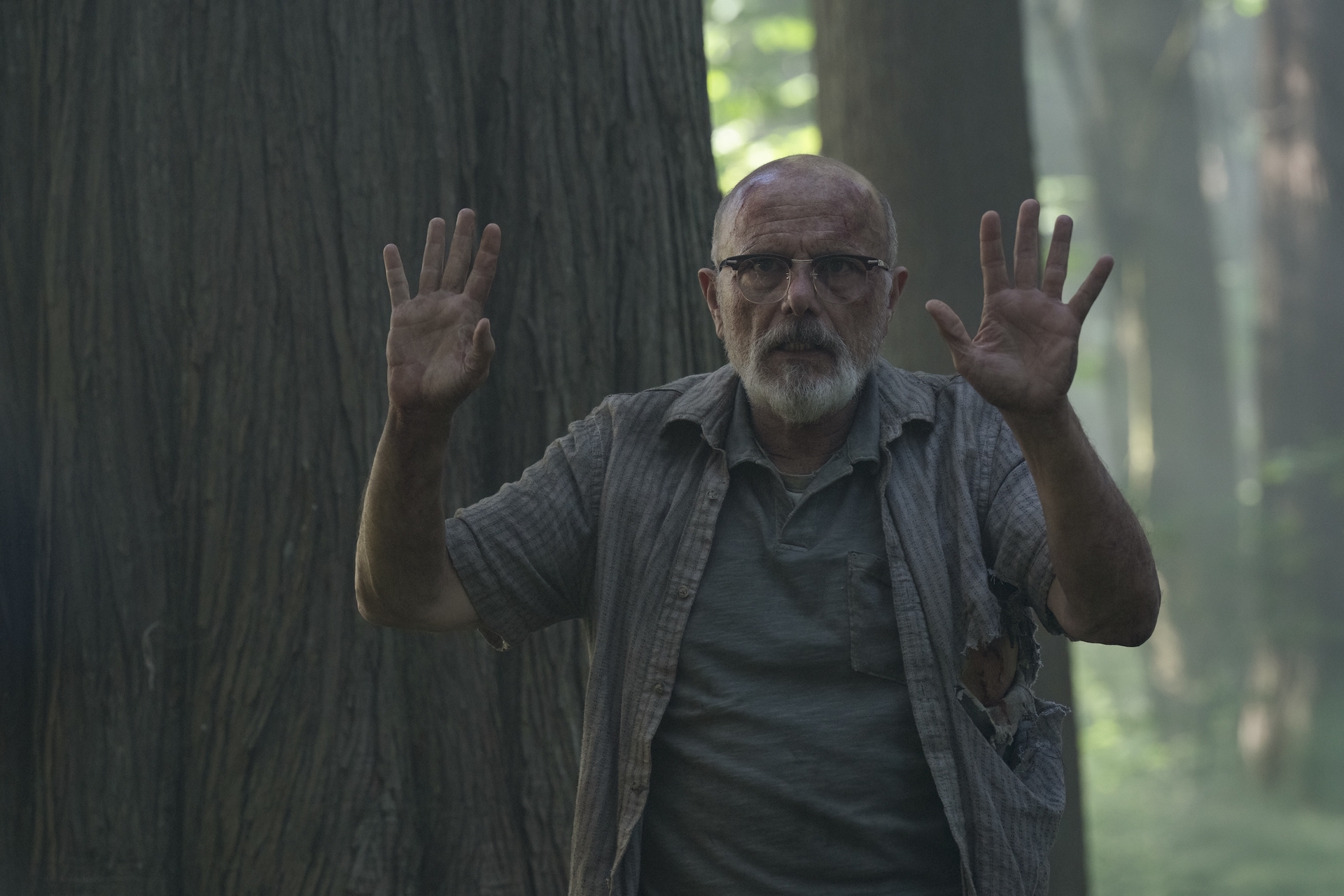
The Last of Us packs new characters and new revelations into its latest episode

New episodes of season 2 of The Last of Us are premiering on HBO every Sunday night, and Ars' Kyle Orland (who's played the games) and Andrew Cunningham (who hasn't) will be talking about them here after they air. While these recaps don't delve into every single plot point of the episode, there are obviously heavy spoilers contained within, so go watch the episode first if you want to go in fresh.

Kyle: We start this episode from the perspective of a band of highly armed FEDRA agents in 2018 Seattle, shooting the shit in a transport that somehow still has usable gasoline. Maybe it's just the political moment we're in, but I was not quite emotionally prepared for these militarized characters in my post-apocalyptic escape show to start casually using "voters" as an ironic signifier for regular people.

"LOL, like we'd ever let them vote, amirite?"

Andrew: We've spent so little time with FEDRA—the post-collapse remnant of what had once been the US government—since the very opening episodes of the show that you can forget exactly why nearly every other individual and organization in the show's world hates it and wants nothing to do with it. But here's a reminder for us: casual cruelty, performed by ignorant fascists.

Of course as soon as you see and hear Jeffrey Wright, you know he's going to be A Guy (he's an HBO alum from Boardwalk Empire and Westworld, among many, many other film, TV, vocal, and stage performances). He just as casually betrays and blows up the transport full of jumped-up FEDRA jarheads, which is a clear prestige TV storytelling signifier. Here is a Man With A Code, but also a Man To Be Feared.

Kyle: Yeah, Isaac's backstory was only broadly hinted at in the games, so getting to see this big "Who This Character Is" moment in the show was pretty effective.

What I found less effective was Ellie playing a very able A-Ha cover when she discovers the abandoned guitar room. In the game it serves as a welcome change of pace from a lot of frenetic action, and a good excuse for an endearing guitar-playing mini-game. Here it felt like it just kind of dragged on, with a lot of awkward dwelling on close-ups of Dina's creepily enamored face.
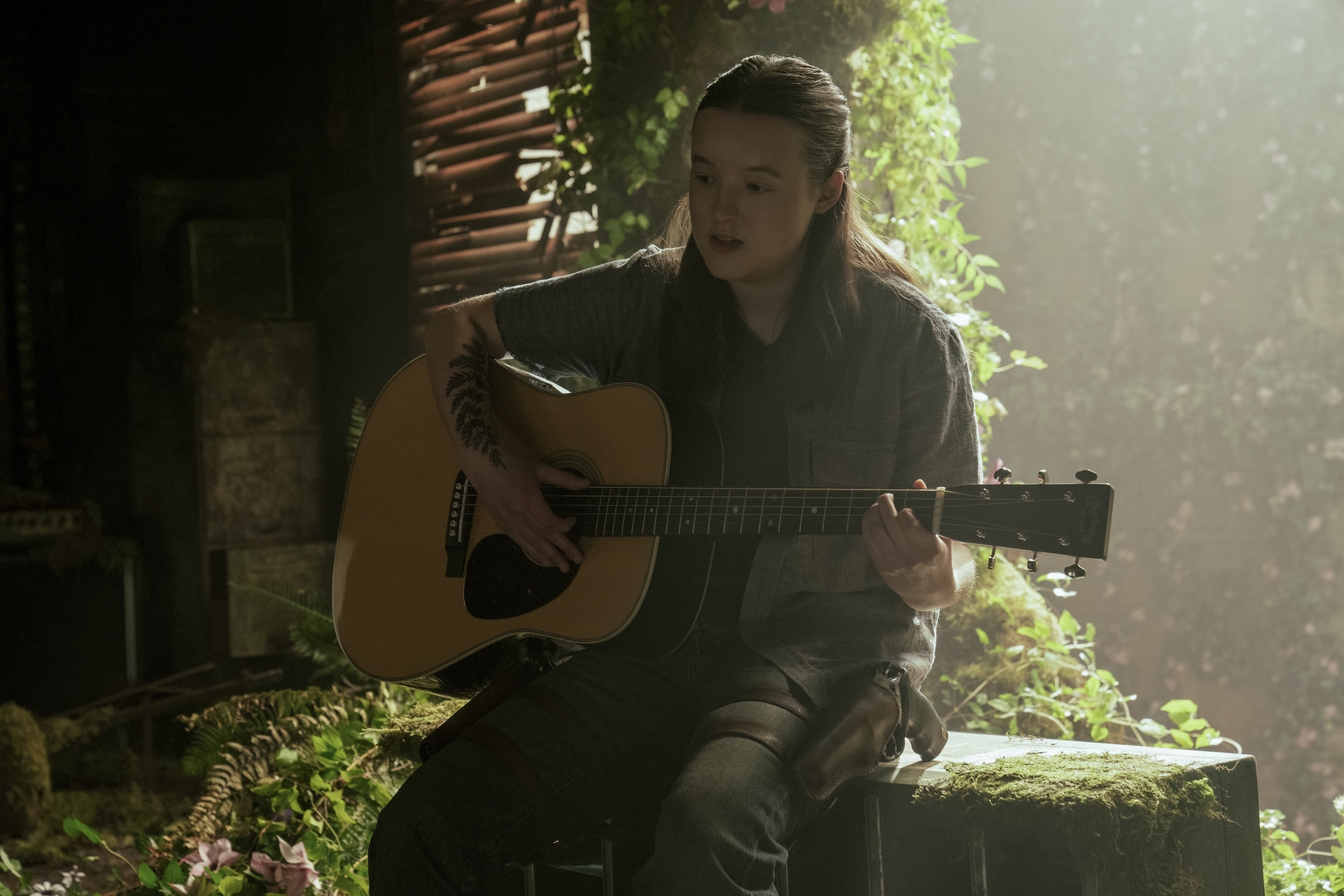
I'll.... be..... gone..... in a day or... twooooooooo. Credit: Warner Bros. Discovery

Andrew: You know what, though, I do appreciate that the show at least made an effort to explain why this 30-year-old guitar was still in pristine condition. I don't instantly buy that the silica gel packets (which Ellie, wisely, does not eat) in the guitar case would have lasted for that long, but at least she didn't pull a mossy guitar straight off the wall and start tuning it up. Those strings are gonna corrode! That neck is gonna warp!

I do also think the show (and the game, I guess, picking up your context clues) got away with picking one of the goofiest songs they possibly could that would still read as "soulful and emotionally resonant" when played solo on acoustic guitar. But I suppose that's always been the power of that particular instrument.

Kyle: Both the game and the show have leaned heavily on the '80s nostalgia that Joel passed on to Ellie, and as a child of the '80s, I'll be damned if I said it doesn't work on me on that level.
Andrew: It's also, for what it's worth, exactly what a beginner-to-intermediate guitar player is going to know how to do. If I find a guitar during an apocalypse, all people are going to be able to get out of me are mid-2000s radio singles with easy chord progressions. It's too bad that society didn't last long enough in this reality to produce "Boulevard of Broken Dreams."

Kyle: Not to cut short "Guitar Talk," but the show cuts it off with a creepy scene of Isaac talking about high-end cookware to an initially unseen companion on the floor. The resulting scene of torture is, for my money, way worse than most anything we're exposed to in the games—and these are games that are not exactly squeamish about showing scenes of torture and extreme violence!

Felt to me like they're taking advantage of HBO's reputation for graphic content just because they could, here...

Andrew: Definitely gratuitous! But not totally without storytelling utility. I do think, if you're setting Isaac up to be a mid-season miniboss on the road to the Dramatic Confrontation with Abby, that you've got to make it especially clear that he is capable of really nasty things. Sure, killing a truckful of guys is ALSO bad, but they were guys that we as viewers are all supposed to hate. Torturing a defenseless man reinforces the perception of him as someone that Ellie and Dina do not want to meet, especially now that they've popped a couple of his guys.

Because Ellie and Dina have unwittingly wandered into the middle of a Seattle civil war of sorts, between Isaac and his militarized WLF members and the face-cutting cultists we briefly met in the middle of last episode. And while the WLF types do seem to have the cult outgunned, we are told here that WLF members are slowly defecting to the cult (rather than the other way around).
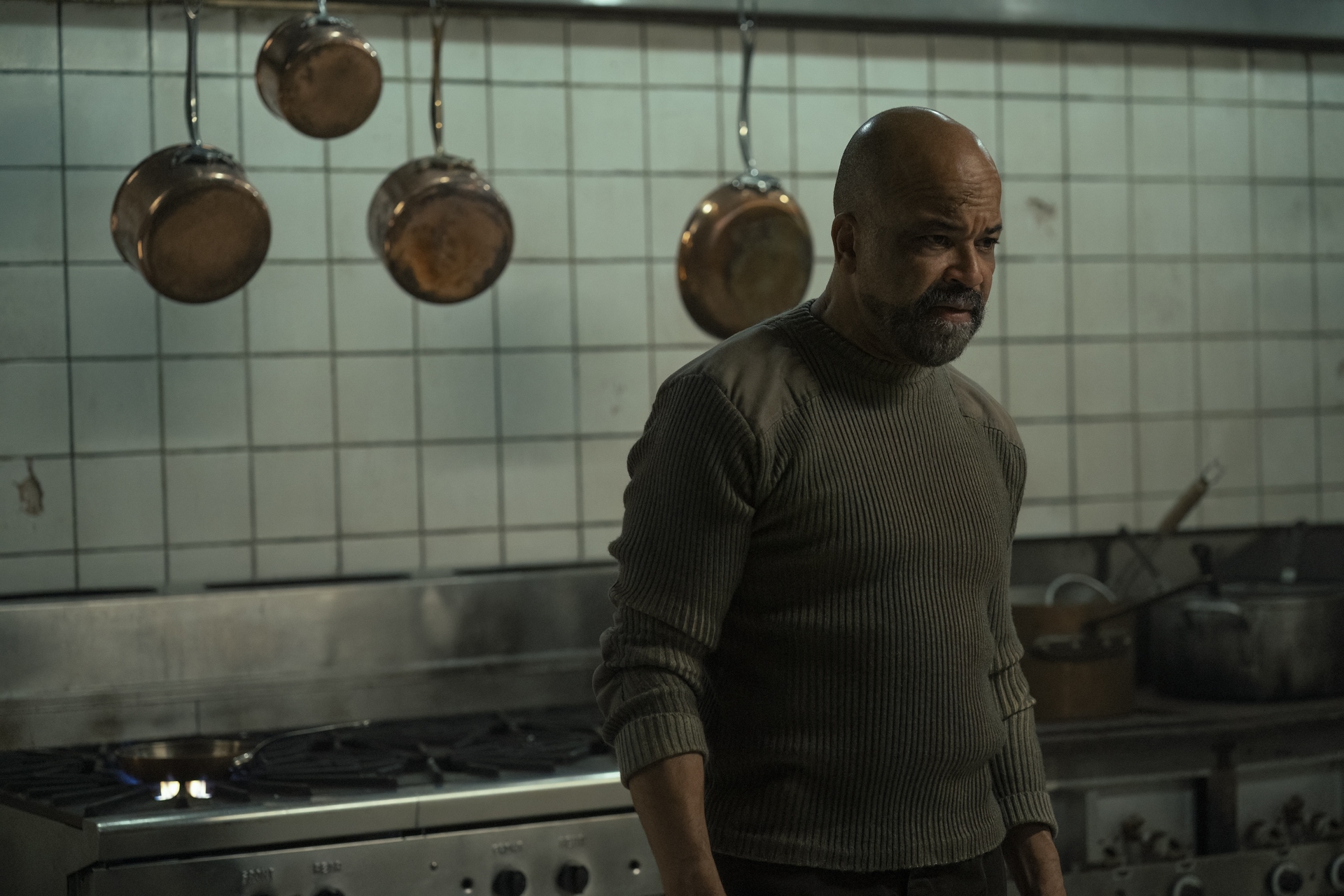
Welcome back to "Jeffrey Wright discusses cookware." I'm Jeffrey Wright. Today on program, we have a very special guest... Credit: Warner Bros. Discovery

Kyle: I will say I appreciated the surprisingly cogent history of the "chicken and egg games" beef between the two factions, as discussed between torturer and torture victim. Definitely a memorable bit of world-building.

But then we're quickly back to the kind of infected attack scene that now seems practically contractually obligated to happen at least once an episode. At this point, I think these kinds of massive setpiece zombie battles would work better as a light seasoning than a thick sauce that just gets dumped on us almost every week.

Andrew: People in and from Seattle seem to have a unique gift for kicking up otherwise dormant swarms of infected! I know we'll get back to it eventually, but I was more intrigued by the first episode's reveal of more strategic infected that seemed to be retaining more of their human traits than I am by these screaming mindless hordes. Here, I think the tension is also ratcheted up artificially by Ellie's weird escape strategy, which is to lead the two of them through a series of dead ends and cul-de-sacs before finally, barely, getting away.

But like you said, gotta have zombies on the zombie show! And it does finally make the "Dina finds out that Ellie is immune" shoe drop, though Dina doesn't seem ready to think through any of the other implications of that reveal just yet. She has her own stuff going on!

Kyle: Yes, I've had to resist my inclination to do the remote equivalent of nudging you in the ribs to see if you had picked up on the potential "morning sickness" explanation of Dina's frequent vomiting (which was hidden decently amid the "vomiting because of seeing horrifying gore" explanation).

Andrew: It does explain a couple of things! It does seem like a bit of a narrative shortcut to make Ellie extremely invested in Dina and whether she lives or dies, and given this show I am worried that this zygote is only going to be used to create more trauma for Ellie, rather than giving us a nuanced look at parenting during an apocalypse. But it is sweet to see how enthusiastically and immediately Ellie gets invested.

A question for you, while spoiling as little as you can: Are we still mostly just adapting the game at this point? You'd mentioned getting more Isaac backstory (sometimes the show expands on backstories well and sometimes it doesn't), and some things have happened a bit out of order. But my impression is that we haven't gotten a full departure a la the Nick Offerman episode from last season yet.
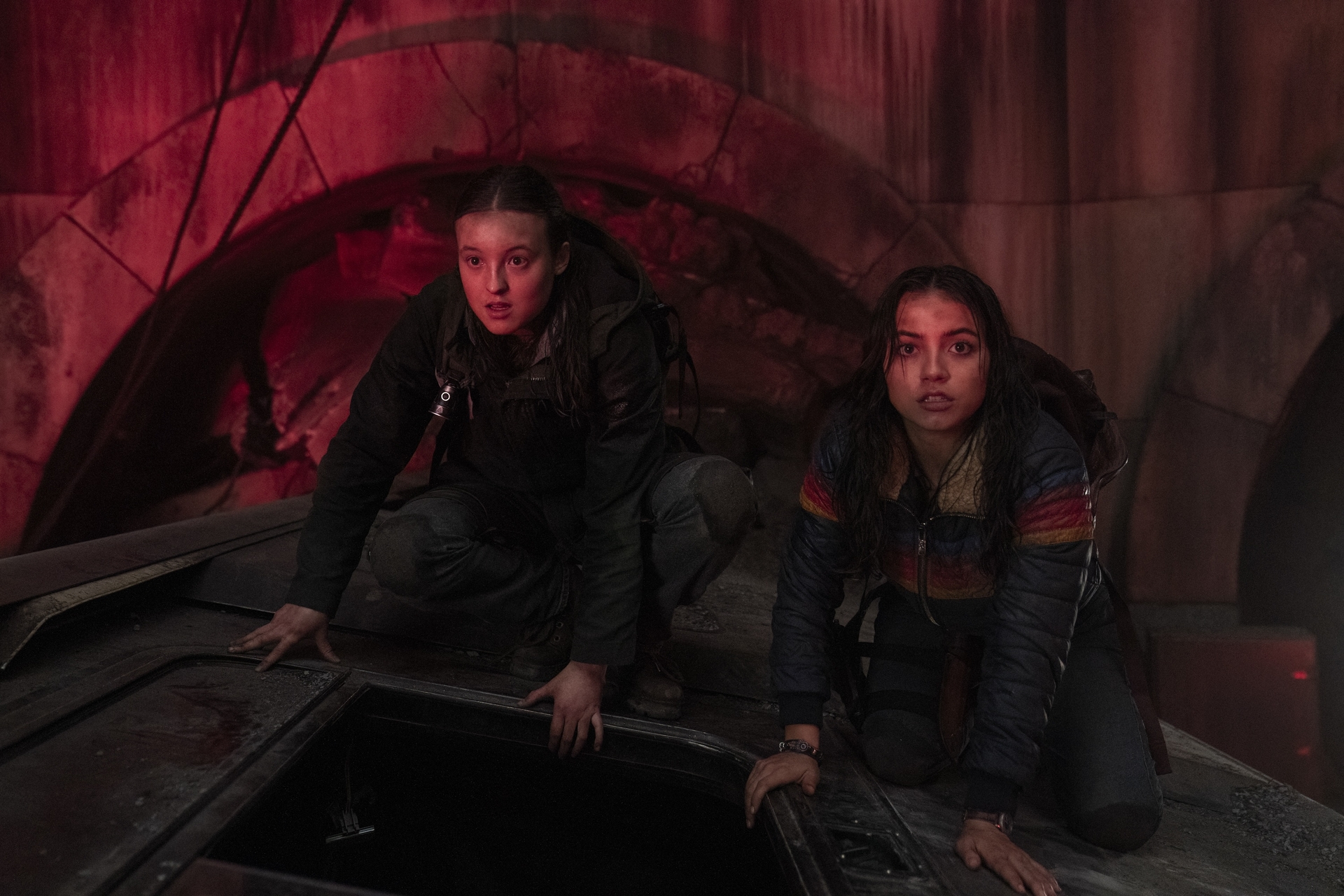
How do we keep getting into these messes? Credit: Warner Bros. Discovery

Kyle: At this point it's kind of like a jazz riff on what happens in the game, with some bits copied note for note, some remixed and thrown into entirely different temporal locations, and some fresh new improv thrown in for good measure.

I'm definitely not a "the game is canon and you must interpret it literally" type of person, but the loose treatment is giving me a bit of whiplash. The reveal of Dina's pregnancy, for instance, is not greeted with nearly as much immediate joy in the games. That said, the moment of joy Ellie and Dina do share here feels transplanted (in tone if nothing else) from an earlier game scene that the show had mostly skipped thus far. It's like free association, man. Dig it!

The show also spends an inordinate amount of time discussing how pregnancy tests work in the post-apocalypse, which for me pushed past world-building and into overexplaining. It's OK to just let stuff be sometimes, y'know?

Andrew: It's jazz, man. It's about the zombies you don't kill.

However it's been rearranged, I can still tell I'm watching a video game adaptation, because there are stealth kills and because important information is conveyed via messages and logos scrawled in blood on the walls. But I am still enjoying myself, and doing slightly less minute-to-minute missing of Joel than I did last episode. Slightly.

The episode ends with Ellie and Dina hearing the name of someone who has the same name as someone who knew Abby over a WLF walkie-talkie they nabbed, which gives them their next objective marker for Abby Quest. But they've got to cross an active war zone to get where they're going (though I couldn't tell from that distance whether we're meant to be able to tell exactly who is fighting who at the moment). Guess I'll have to wait and see!

Kyle: Personally, I'm hoping we see the moment where the newly out-and-proud bisexual Dina finally realizes "what's the deal with all the rainbows." Show your post-apocalyptic pride, girl!

Read full article

Comments


from Gaming – Ars Technica https://ift.tt/xa0RE5u
Continue Reading…

Chips aren’t improving like they used to, and it’s killing game console price cuts

For many, many years, I wouldn't get a new game console until a couple years after it launched. This was partly because I wanted any new console I bought to have a decent-sized library of things to play, and partly because it sometimes paid to sit back and see which console was going to "win" the generation in terms of first-party exclusives and third-party developer support.

But mostly it was because, from the Atari VCS in the 70s all the way up through the PlayStation 4 and Xbox One generation in the 2010s, you could always count on game consoles getting cheaper as time went on. Those price reductions would often also come with internal tweaks and external redesigns—smaller or slimmer or otherwise improved versions of the console that made them superior to the originals (though you would occasionally lose a lesser-used feature or two along the way).

But both of those things have mostly stopped. The last permanent price drop for a major home or portable console we could find came back in 2016, when the PS4 Slim launched and dropped the price of entry from $349 to $299 (this doesn't count the launch of new editions of consoles with reduced feature sets, like the New Nintendo 2DS in 2017 or $249 all-digital Xbox One in 2019). This generation, we've seen something that would have been unheard of a few years ago: price increases for consoles, including $50 extra for the new OLED edition of the Nintendo Switch in 2021, a $50 price hike for the slimmer disc-drive-less version of the PlayStation 5 in 2023, and $80 to $100 price hikes for the exact same unimproved versions of the Xbox Series S and X earlier this week.

Read full article

Comments


from Gaming – Ars Technica https://ift.tt/GKkxJXO
Continue Reading…

Epic Games Store completely eliminates revenue fees for smaller developers

It has been over six years since Epic started undercutting Steam's 30 percent revenue share for developers, asking for just 12 percent of sales on its then-new Epic Games Store. Now, Epic is going even further by reducing those fees to zero for a game's first $1 million in annual sales.

The newly announced fee structure will go into effect in June, Epic said, and will apply to a developer's revenue on a "per app" basis. After the first $1 million in annual sales, apps will be charged the usual 12 percent fee for listing on the Epic Games Store.

This isn't the first time Epic has offered a financial break to smaller developers. Back in 2011, the company eschewed royalty payments for the first $50,000 in sales for projects made with the newly free Unreal Development Kit. By 2020, that royalty-free grace period for Unreal Engine projects was increased to cover the first $1 million in lifetime sales for a project.

Read full article

Comments


from Gaming – Ars Technica https://ift.tt/uEK8c6C
Continue Reading…

Grand Theft Auto VI gets pushed back to May 26, 2026

Rockstar's highly anticipated Grand Theft Auto VI will finally launch on May 26, 2026, Rockstar Games said in a Friday morning announcement.

That means the game will miss the "2025" release window that the developer announced alongside the game's first trailer in late 2023. That delay is needed, Rockstar said, so the company can use "this extra time to deliver at the level of quality you expect and deserve."

"We are very sorry that this is later than you expected," Rockstar wrote in its announcement. "The interest and excitement surrounding a new Grand Theft Auto has been truly humbling for our entire team. We want to thank you for your support and your patience as we work to finish the game."

Read full article

Comments


from Gaming – Ars Technica https://ift.tt/SnDcWJk
Continue Reading…

Recent Posts

Unordered List

Text Widget

Blog Archive

Like US On Facebook

Email Subscriptions

Enter your email address:

Delivered by FeedBurner

Like US On Facebook

Contact Form

Name

Email *

Message *